Social Sharing on TV
How might we encourage people to see TV as more than just a passive screen?This project explored a lightweight social experience on TV by enabling a low-friction, genuine way to share and receive recommendations between close friends.
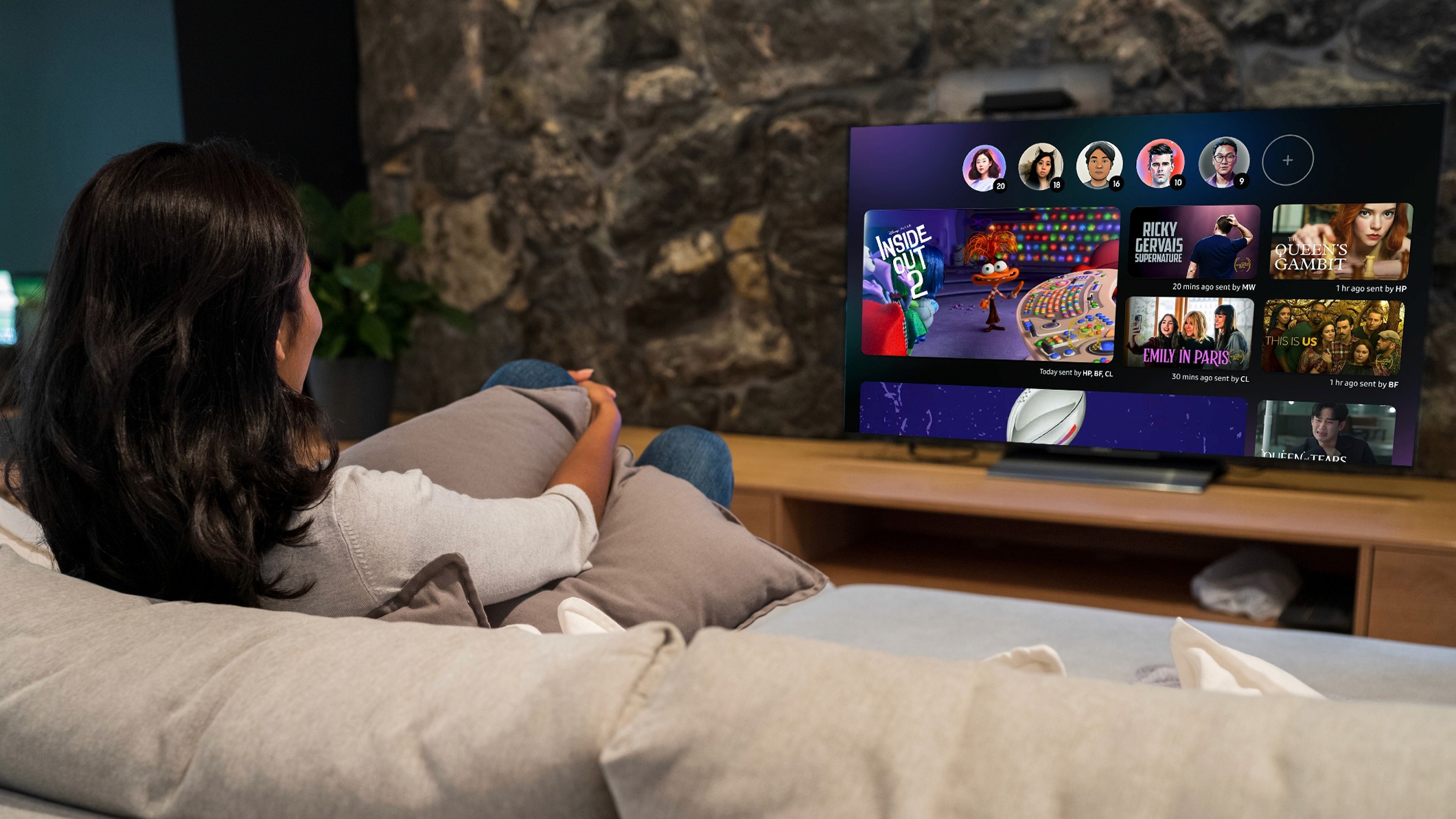
Context
Prior research revealed two things: content discovery is a persistent pain point, and people care deeply about what friends and family are watching. Thus, the opportunity of social discovery through trusted recommendations is clear — but it has to stay unobtrusive.
How might we create a social layer on TV that feels personal and helpful, without becoming overwhelming?
Approach
I approached this as a system design problem: establish principles first, then define and iterate on end-to-end flows. As technical constraints surfaced, I partnered with prototypers to stress-test "magic moments" — translating concepts into defensible, patentable direction.

Benchmarking
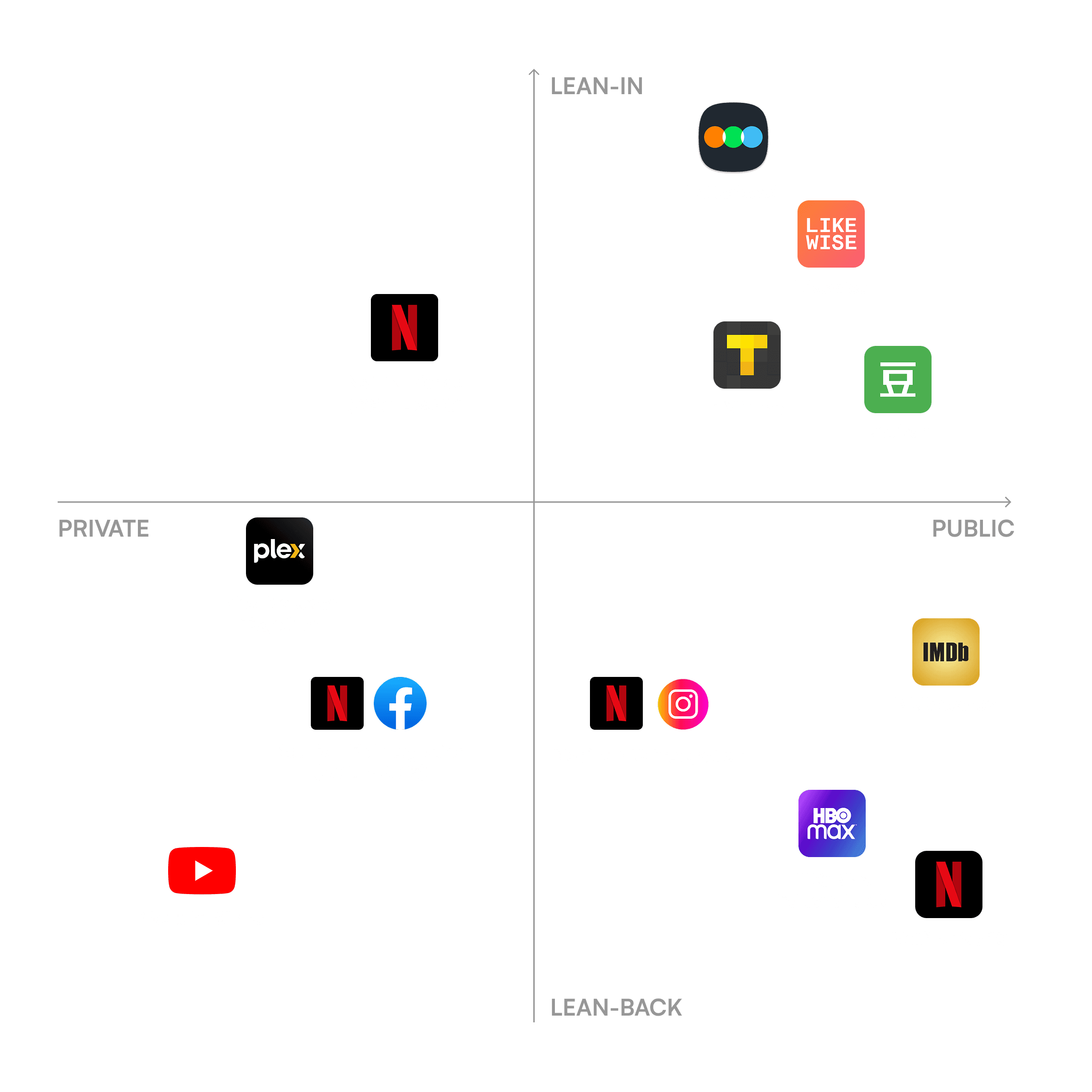
Social sharing around content discovery is not new. Past efforts across streaming platforms and companion apps reveals recurring patterns.
Many social TV features failed due to privacy concerns, low visibility, added friction, weak incentive.
In contrast, the winners emphasized human touch and genuine expression, often living outside individual streaming services to enable cross-platform discovery.
Design Principles
As a TV platform, Samsung combines qualities of both social companion apps and streaming services. It has the ability to connect content across platforms and enable flexible recommendations, while the large-screen demands a content-first approach similar to traditional streaming experiences.
To get this balance right, I focused on distilling design principles that respond to the platform’s nuances—balancing connection with immersion, and flexibility with restraint.
Respect the User
User's privacy, taste, and comfort come first. Every interaction should reinforce trust.
Preserve Immersion
Social interactions must stay subtle, secondary, and non-intrusive — never competing with content.
Effortless by Default
Initiating, acting on, and maintaining social interactions should require minimal effort.
Genuinely Personal
Discovery should feel like a recommendation from a friend, not an algorithm.
MVP Experience
Guided by design principles and validated through user testing (n=8), I defined four core flows — onboarding, sending, receiving, and library — with voice as the primary input to reduce friction and preserve immersion.
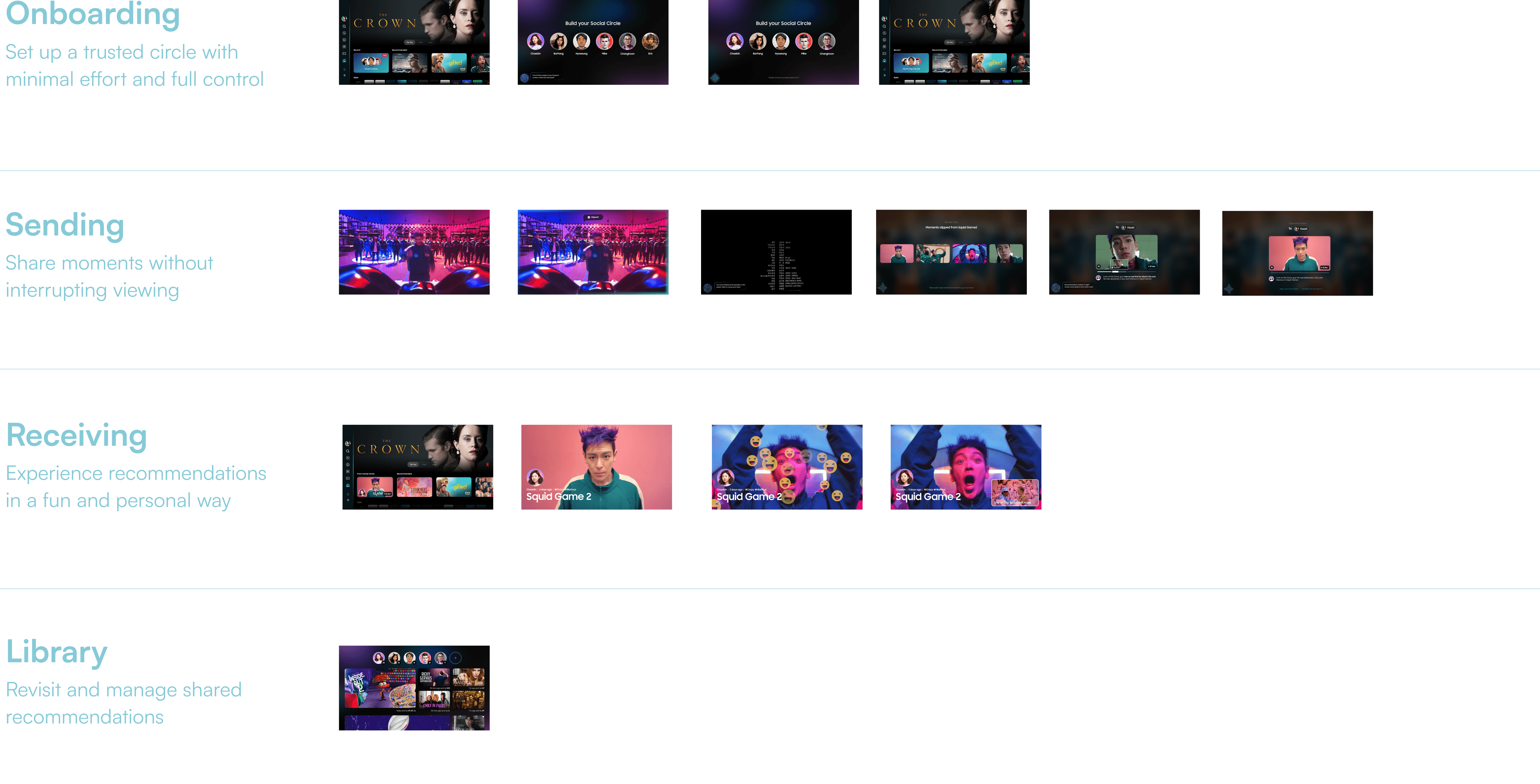
I created several experience videos to align with high-level leadership and align experience vision with production teams. Here is a snapshot:
Pushback
Stakeholder conversations surfaced two platform-level blockers:
Social circles & accounts: How should close friend circles be defined and managed?
Interaction complexity: How can sharing feel natural and effortless on a TV while user is watching the content?
Prototyping
To address stakeholder concerns, I partnered with prototypers to build functional proofs-of-concept for the challenging "magic moments".
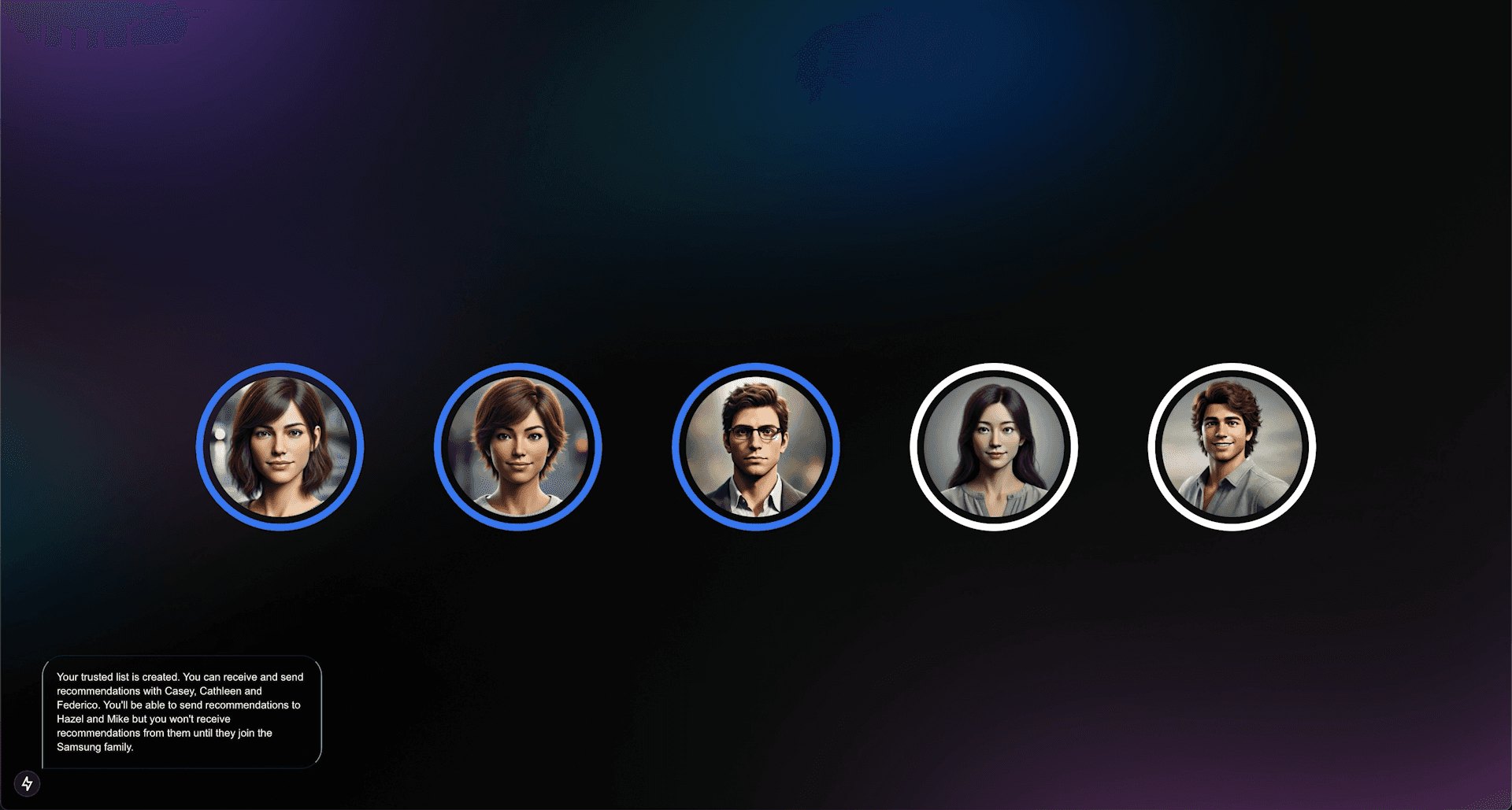
Prototype 1: Contact-based Friend Adding
To address the identity challenge, this prototype demonstrated how users could build their social circle using natural language like nicknames and conversational phrasing, pulling directly from existing Samsung account data to prove real-world feasibility without friction.
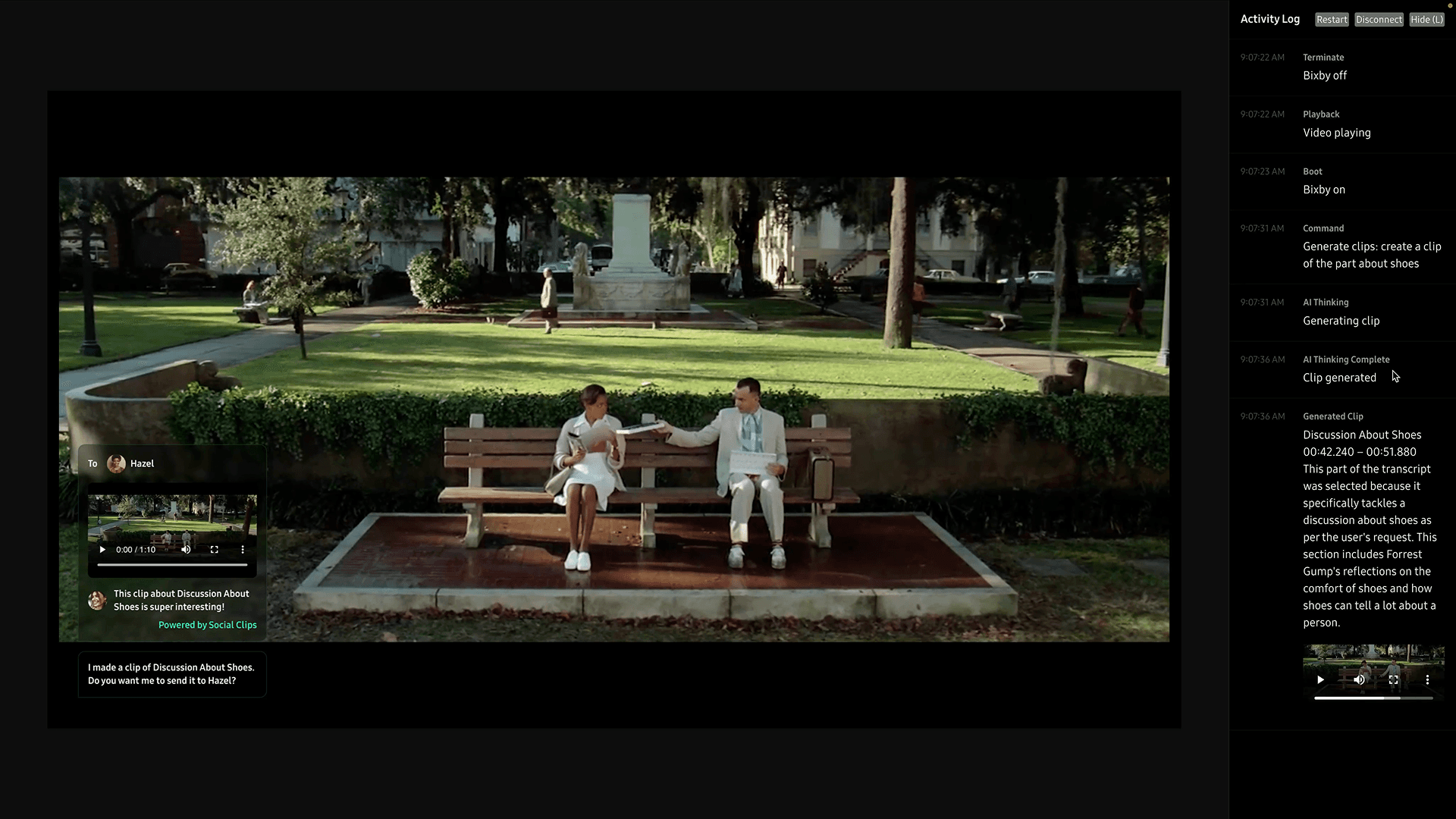
Prototype 2: Context-Aware Video Sharing
To address the input challenge, this prototype showed how voice could replace complex manual controls. A conversational request like "clip where he opens the box" lets the system identify and capture the exact scene — making sharing as natural as describing a moment to someone next to you.
Patent Filing
While business constraints regarding risks of social experiences on TV paused immediate commercial launch, the concept development and prototyping revealed clear IP value. The project pivoted from product to platform, establishing foundational patents for how social, AI, and content will converge on the big screen.
The work resulted in 2 Grade A patents covering the core interaction and system concepts, currently confidential pending publication.
Takeaways
1. Designing for Strategic Alignment. Vision videos buy initial alignment — but engineering and business feasibility conversations need to happen in parallel, not after.
2. Balancing Design Craft with System Strategy. Great UX demands both craftsmanship and systems thinking. The "Craftsman" hats of perfecting the immersive experience and "Strategist" hat of addressing long-term platform goals together push vision into roadmap.
3. Defining Defensible Innovation. In a corporate R&D environment, while launching isn't always viable, rigorous prototyping still produces defensible value through patents