Galaxy AI
for Dyslexia
Dyslexia is a brain-based difference that makes reading and writing harder—not because of intelligence, but because the brain processes language differently.
This studio-initiated project explored how emerging AI capabilities could better support dyslexic users in everyday life. Grounded in human-centered research and co-creation, it translated neurodiverse needs into scalable AI interaction principles and benefits both dyslexic users and a broader audience.
Process
We went through a 6 weeks sprint through a bottom-up human-centered design process from values research to final concepts.
User Research
We began with surveys and diary studies to understand how dyslexia in everyday life. In the research, we focused on core activities, recurring challenges, and existing coping strategies. Rather than isolated pain points, we uncovered patterns of cognitive load, emotional stress, and loss of confidence that compound over time.
On the right side is a snapshot of dyslexic participants' sentiment.

Benchmarking
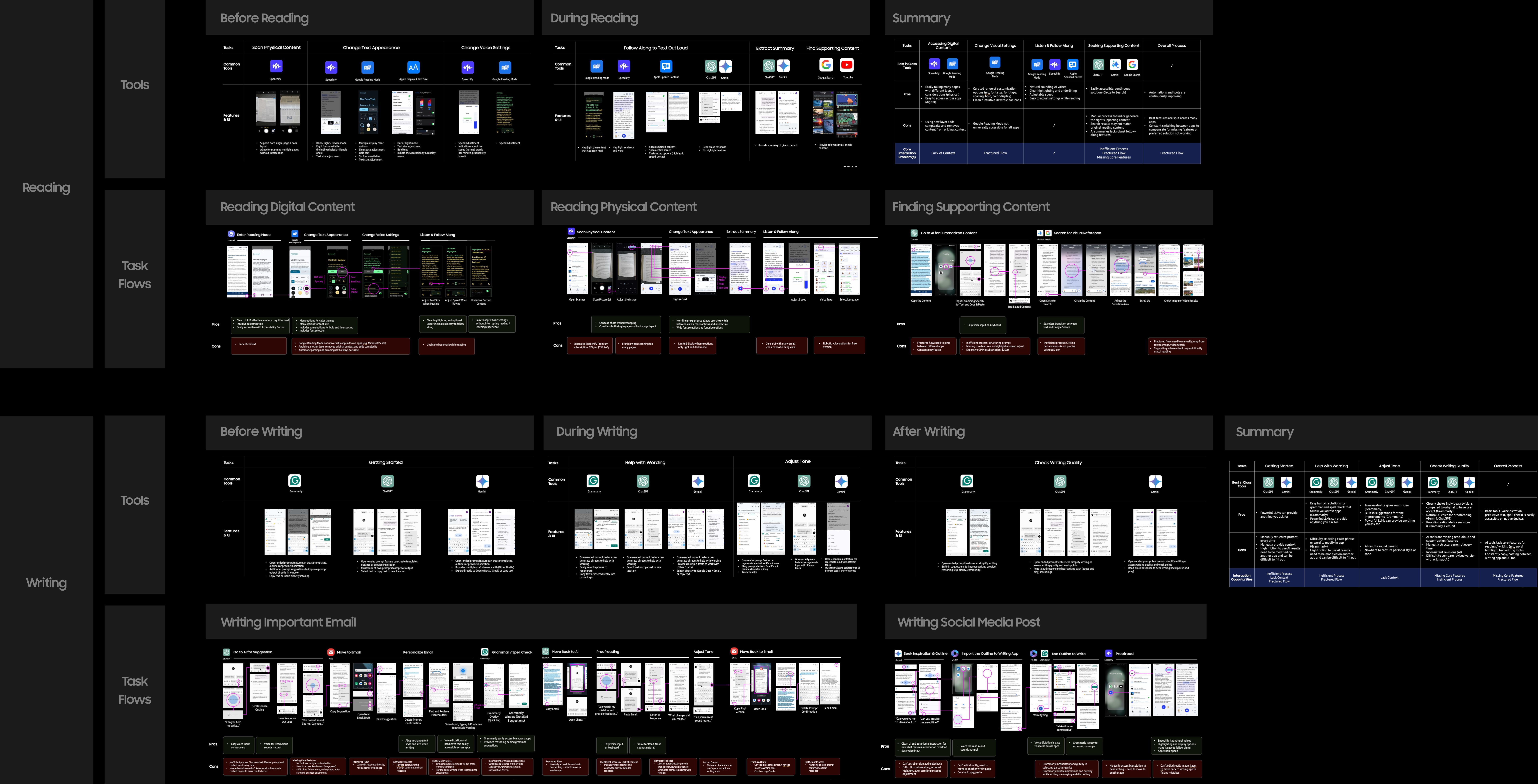
Next, we studied how dyslexic users interact with mainstream reading and writing tools in their workflows. Many tools offer isolated assistance, but consistently fail to support the entire journey from understanding to expression to action.
We identified four recurring interaction gaps appearing in users' everyday life:
Fractured flow: users are forced to switch between tools and modes
Lack of context: tools assist at a surface level without understanding intent
Inefficient processes: excessive steps increase cognitive load
Missing core features: key dyslexia-specific needs remain unaddressed
Opportunities
These gaps aren't isolated issues, but systemic breakdowns that appear whenever users engage with textual information. We identified opportunities across three areas:
Comprehension
Supporting users in understanding and retaining information in ways that match how they process language.
Expression
Helping users communicate with information authentically, confidently, and in their own voice—without feeling corrected or replaced.
Discovery
Enabling users to explore ideas, take actions, and move forward with information, without being overwhelmed.
Wireframing
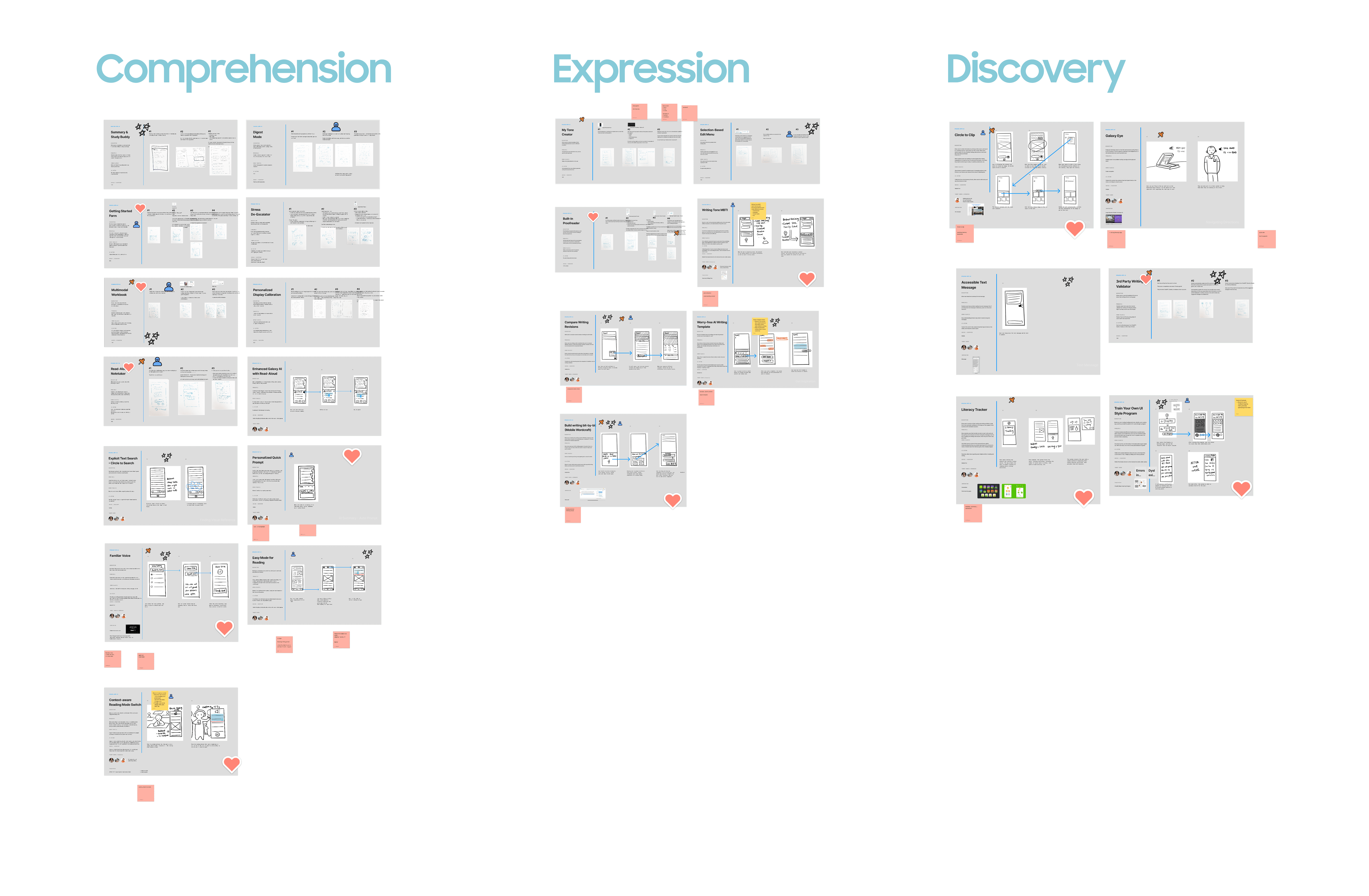
After a broad exploration across three opportunity areas, we used a user survey (n=300) to prioritize concepts considering impact, feasibility, and scalability.
Ultimately, we narrowed to 7 high-potential concepts across the 3 opportunity areas, and refined through co-creation with dyslexic users.
Comprehension
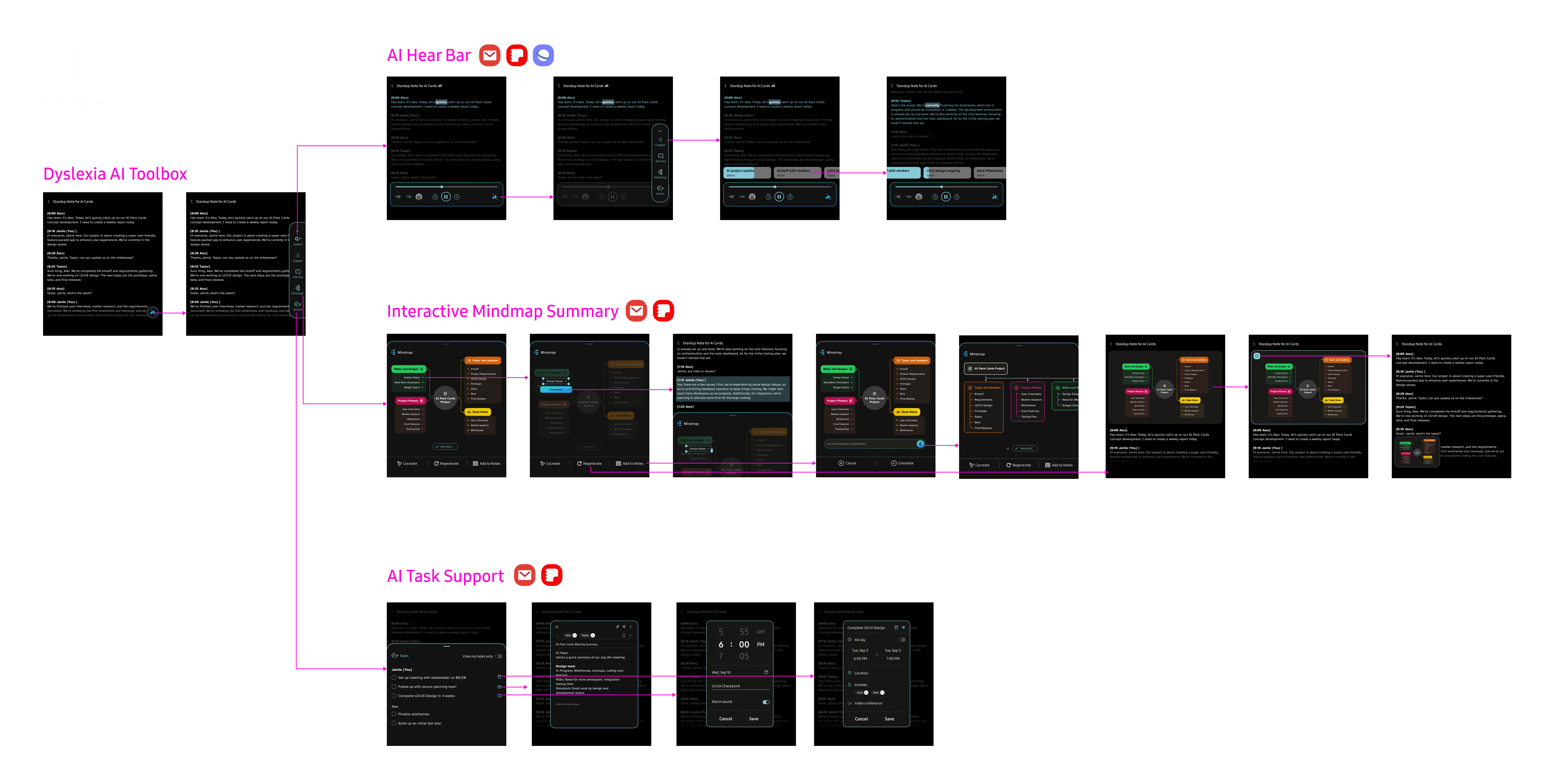
AI Hear Bar: Breaks content into intuitively generated chapters and delivers it through a human-like voice
Interactive Mind Map Summary: Transforms content into structured visual summaries users can explore spatially
AI Task Support: Identifies tasks within content and breaks them down into manageable steps
Expression
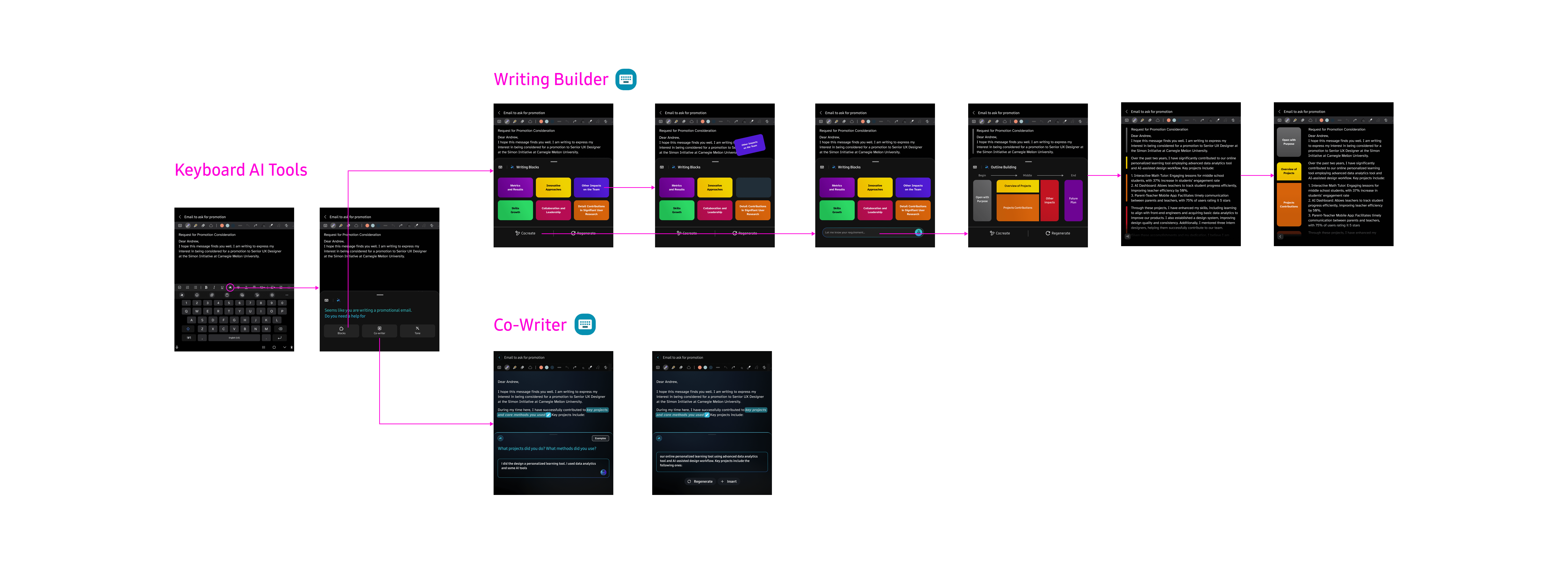
Writing Builder: Modular writing blocks that reduce blank-page anxiety and guide content creation
Co-Writer: An AI partner that adapts tone, structure, and guidance to the user's specific goal
Discovery
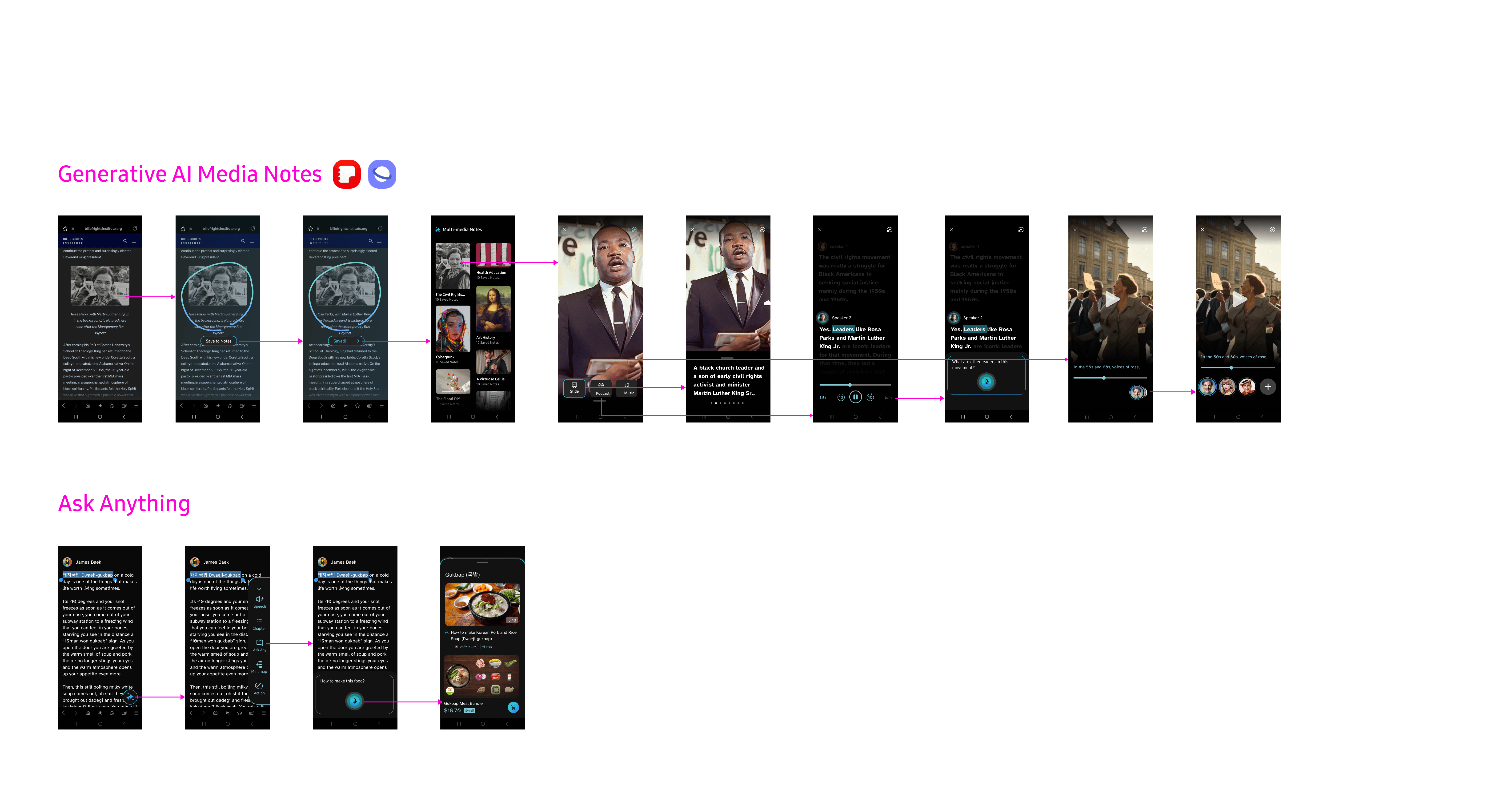
Generative AI Media Notes: Converts saved text into audio, visuals, or structured highlights
Ask Anything: Lets users access explanations or related content directly from selected text
Final Design
After an in-person user test with 7 dyslexic users, we translated research insights and refined concepts into a concise storytelling package designed for senior leadership.
Impact
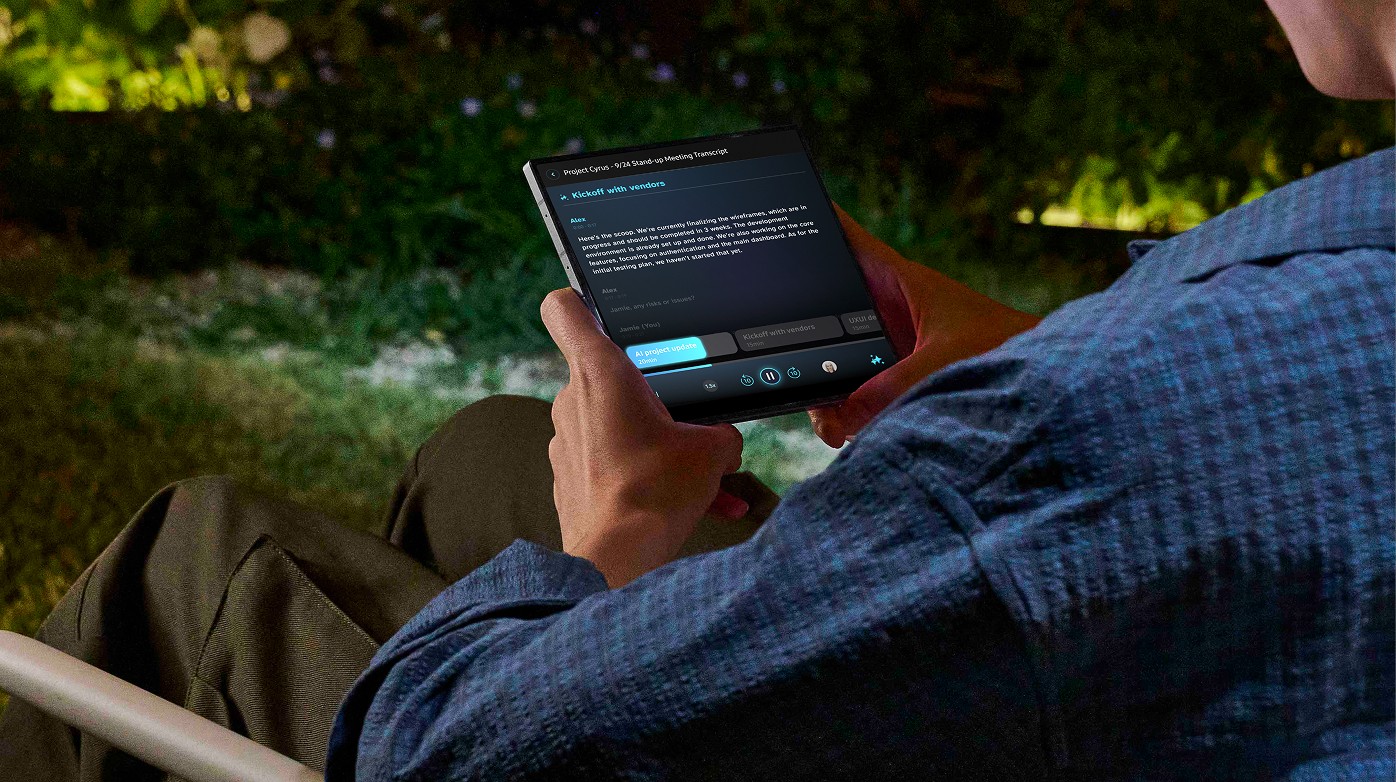
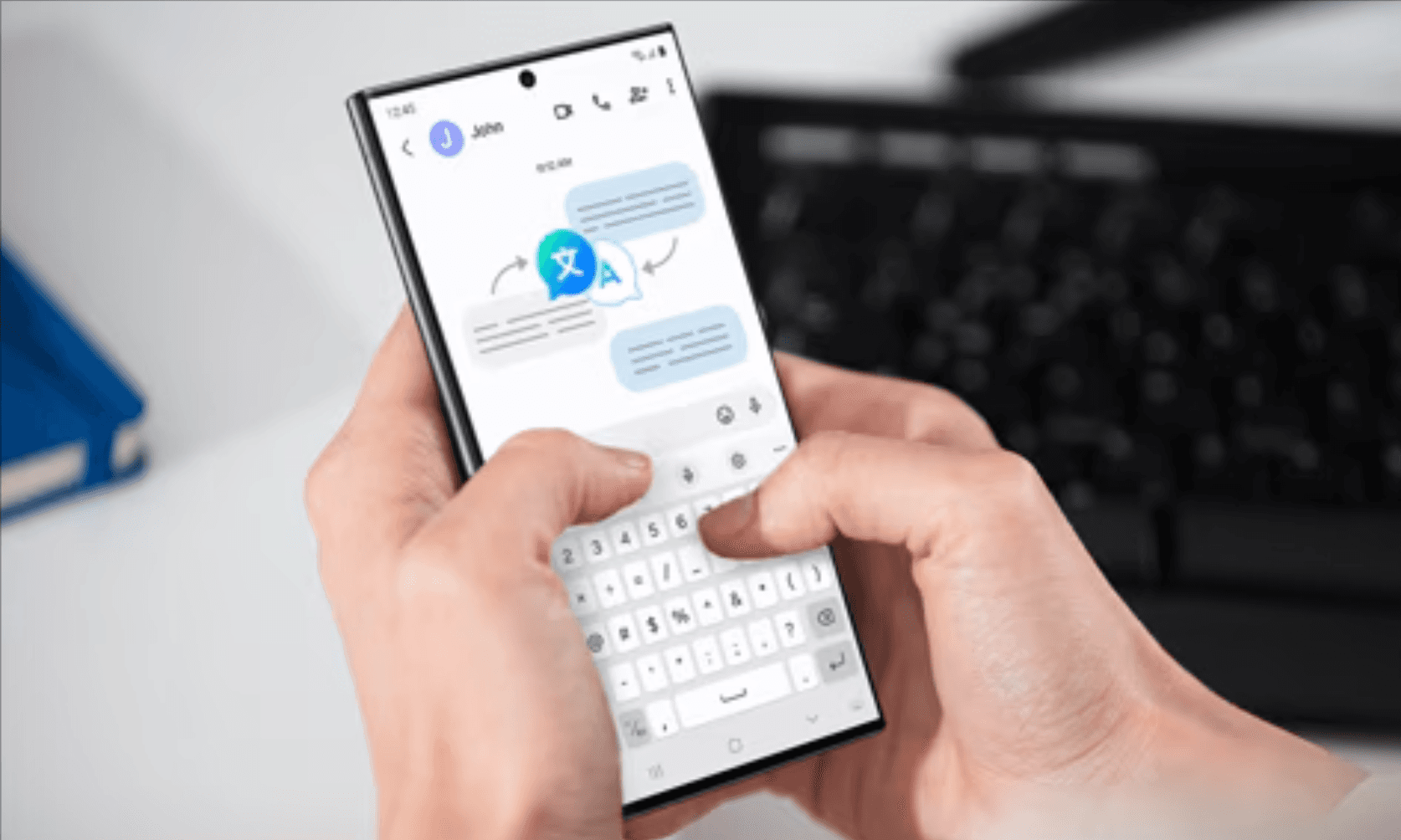
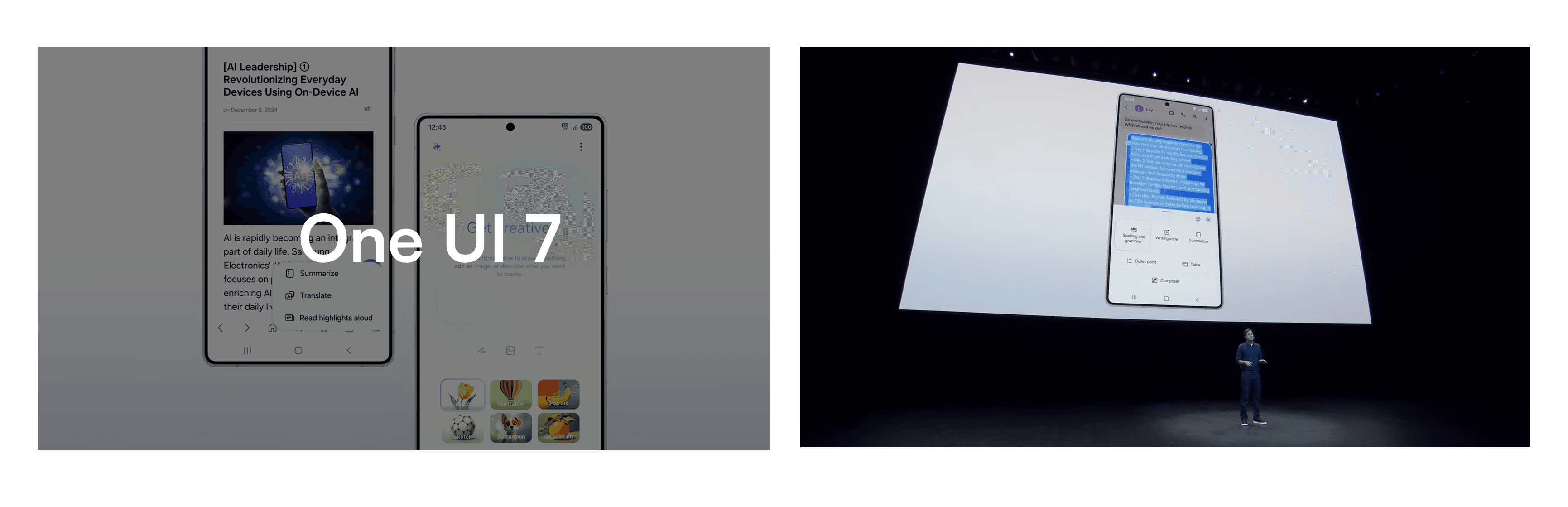
Several principles and concepts from this project informed Galaxy AI features later released in One UI 7, particularly within Note Assist (Autoformat) and Writing Assist (Composer), which is featured in Galaxy Unpacked January 2025.
Takeaways
1. Design with users when lived experience can’t be simulated: Co-creation wasn't a validation step; it fundamentally shaped what felt supportive versus overwhelming, and surfaced assumptions no amount of desk research could catch.
2. Storytelling is a design tool, not just a presentation tool: For dyslexic users, how information is framed and paced matters as much as what's delivered. Narrative prototypes were critical in aligning teams around human value, not just capability
3. Designing for neurodiversity often creates better defaults for everyone: Dyslexic users develop strong information-management strategies out of necessity. Those same strategies lead to more efficient, flexible experiences for all user